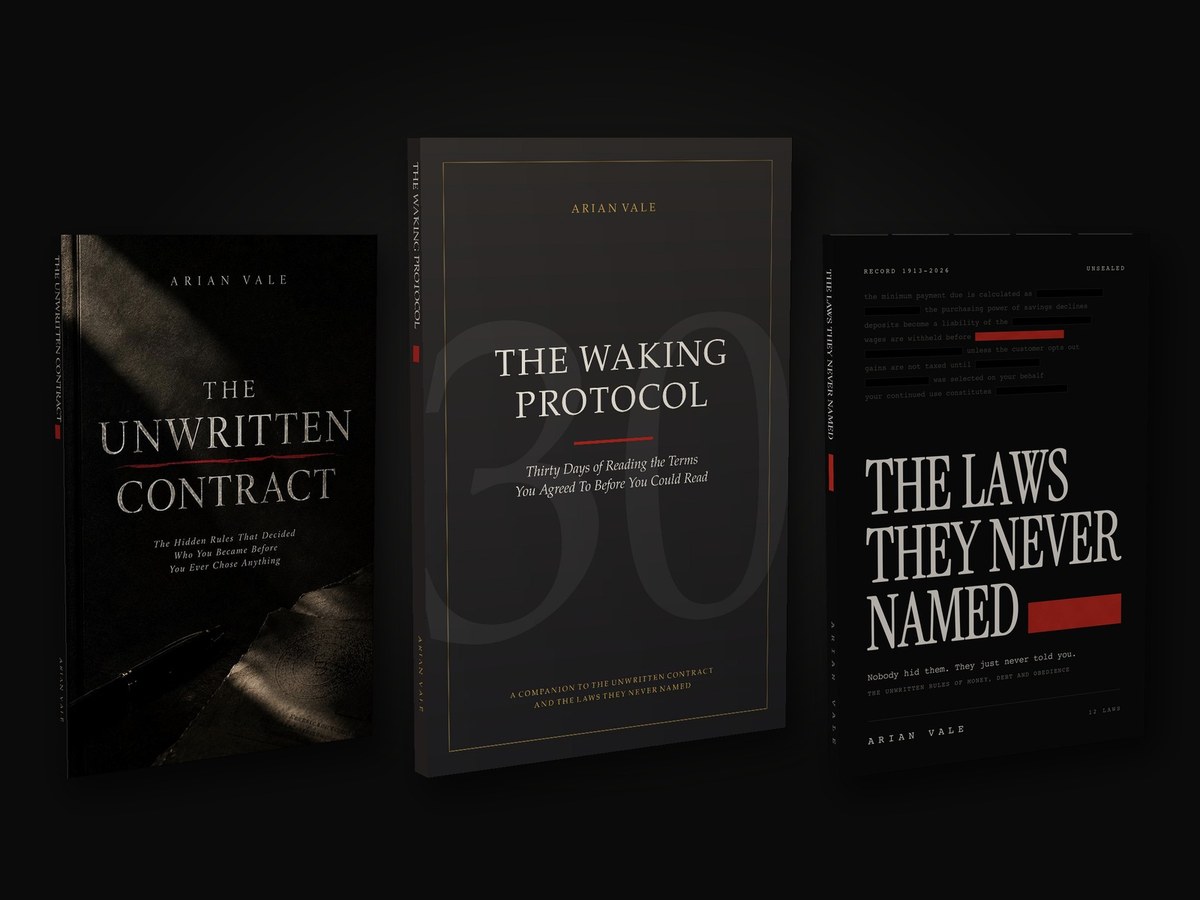
The Unwritten Rules of Money, Debt and Obedience That Quietly Shape an Ordinary Life
Most of what shapes your financial life was never hidden. It was published, legislated and printed in small type, then never explained to you. This book names twelve of those rules, one law at a time.
You were told that a credit score measures responsibility, and nobody mentioned that it was designed to measure how profitably you borrow.
The habit of seeking permission, trained by a world full of gates, can keep people standing outside doors that were never locked.
Outrage without action is just another product, and it is sold to frustrated people every single day.
There is a moment that arrives for most people somewhere between their forty-fifth and fifty-fifth birthday, usually on an ordinary evening when nothing dramatic is happening, when they sit at a kitchen table with a stack of statements in front of them and realize, with a quiet nausea that has no single cause, that they did almost everything they were told to do and still ended up somewhere they never agreed to go. They went to work when they were sick, they paid the bills before they paid themselves, they signed the papers that the polite person across the desk slid toward them, they trusted that the rules were roughly fair because everyone around them seemed to be following the same rules, and now, after twenty or thirty years of obedience, the numbers on the table describe a life that feels strangely borrowed, as though the house, the car, the retirement account and even the calendar belong to someone else who simply allows them to use these things for a monthly fee.
The usual explanation is personal failure, and it is offered so quickly and so often that most people accept it before they have examined it. You should have saved more, you should have spent less, you should have chosen a different career, you should have started earlier, you should have read the fine print, you should have been smarter, and every one of these sentences contains enough truth to sting, which is exactly why they work so well at ending the conversation. A person who believes the problem is their own weakness will spend the rest of their life trying to repair themselves, and they will almost never look up long enough to ask a more dangerous question, which is whether the game itself was arranged so that ordinary obedience would produce exactly this result.
This book is about that question.
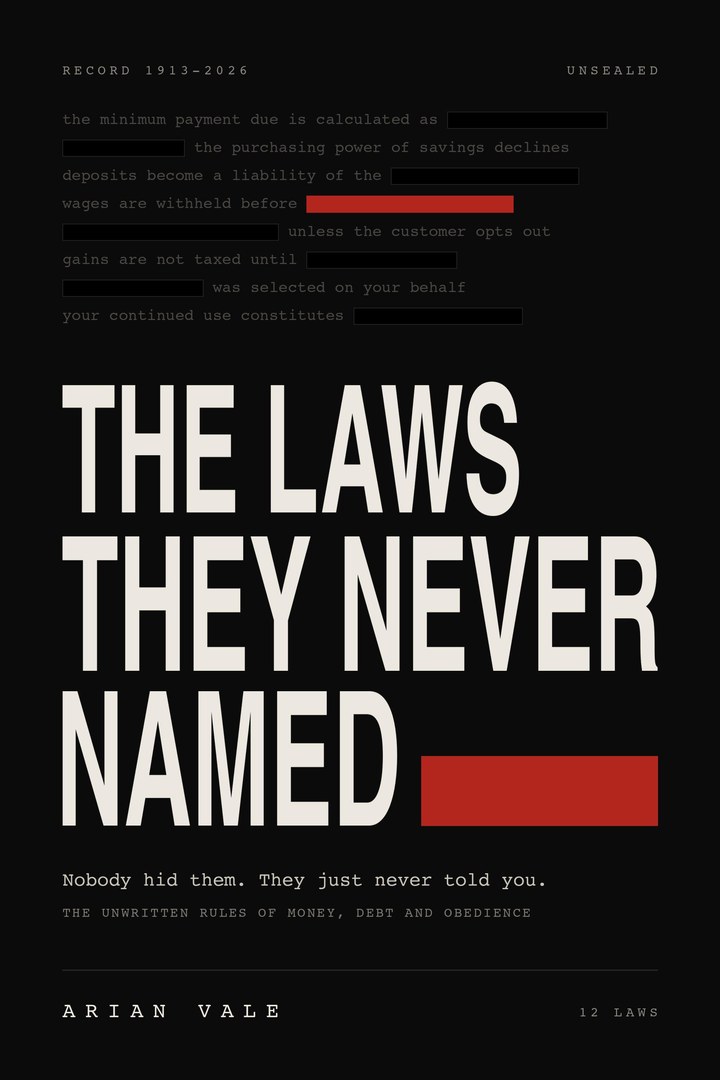
Each law is built on public records: the Federal Reserve, the Bureau of Labor Statistics, the IRS, court decisions and the published rules of the institutions involved. Every source is listed at the back.
Read it for up to 14 days. If it is not for you, one email gets you a full refund. Refund policy
The Unwritten Contract and The Laws They Never Named, plus The Waking Protocol, a 30-day workbook that walks you through your own terms one day at a time. The workbook is only available in this edition.
$45
$55 from January 1
Right after payment you will see a download button on the confirmation screen, and the same link arrives in your inbox from Lemon Squeezy within a few minutes. If you do not see the email, check your spam or promotions folder.
A 198-page PDF, laid out like a printed book. It opens on any phone, tablet, computer or e-reader that reads PDF files, and you can keep it forever.
No. You only enter an email address so the receipt and download link have somewhere to go.
Yes. Checkout is handled by Lemon Squeezy, an established payment platform that processes the order, encrypts your card details and calculates any sales tax. Your card information never reaches this site.
Email thearianvale@gmail.com within 14 days of purchase with the email you used at checkout, and you will get a full refund to your original payment method. No forms, no explanation required.
No. The book is written for education and information. It explains how common financial rules work and where they came from, but it does not tell you what to buy, sell or sign. For decisions about your own situation, talk to a qualified professional.
No. Nothing in it depends on secret societies or hidden villains. Every law is drawn from information that was public the whole time, which is exactly what makes it uncomfortable.
Every law in this book has another side, and most people never find out it exists.
We use cookies to understand how visitors use this site. Privacy Policy